Foundational Equipment
For most people beginning a training programme, a small selection of versatile equipment is more practical than a fully kitted-out home gym. The items listed here cover a wide range of exercises and can be used in limited spaces.
Resistance Bands
Resistance bands (also called loop bands or tube bands) provide variable resistance throughout a movement. They are lightweight, portable, and available in multiple resistance levels. Bands are useful for warm-ups, rehabilitation exercises, assisted pull-ups, and adding resistance to bodyweight movements such as squats and lateral walks. A set of 3–4 bands with different resistance levels typically covers most needs.
Dumbbells
Dumbbells are among the most versatile pieces of equipment available. They allow unilateral (single-arm or single-leg) training, which can help address strength imbalances. For home use, adjustable dumbbells that allow weight changes via a dial or pin system can save space compared to a full rack. A pair that covers a range from approximately 5 kg to 20 kg is a reasonable starting point for general fitness.
Pull-Up Bar
A doorframe-mounted pull-up bar provides access to several effective upper-body and core exercises, including pull-ups, chin-ups, hanging leg raises and dead hangs. Before purchasing, verify that your doorframe can support the weight rating of the bar and that the mounting method suits your door type.
Kettlebells
Kettlebells are effective for exercises that combine strength and cardiovascular conditioning, such as swings, goblet squats, Turkish get-ups and cleans. Their offset centre of gravity also challenges grip strength and core stability. A single kettlebell in the range of 8–16 kg can serve as a starting point, depending on your current strength level.
Exercise Mat
A basic exercise mat provides cushioning for floor-based exercises, stretching and mobility work. Look for a mat that is at least 6 mm thick for adequate joint protection. Non-slip surfaces on both sides help prevent the mat from shifting during use.
Foam Roller
Foam rolling (self-myofascial release) is commonly used as a recovery tool. While the precise mechanisms are still being studied, many individuals report a temporary reduction in muscle soreness and improved range of motion after foam rolling. A standard-density roller (approximately 15 cm diameter, 45–90 cm long) suits most applications.
Equipment You May Not Need Immediately
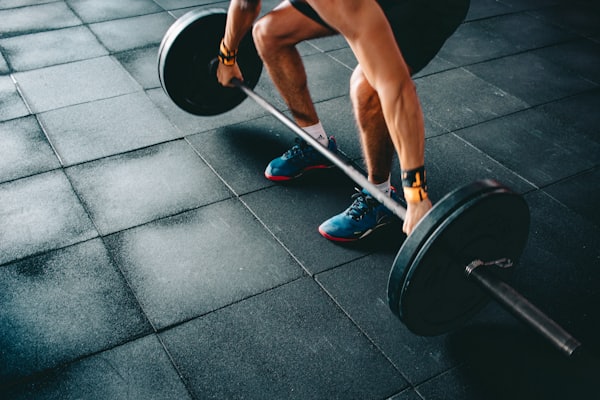
Some items, while useful in certain training contexts, are not essential for most beginners or intermediate trainees. Barbell and rack setups, cable machines, specialised benches and advanced accessories serve specific training goals and may be more relevant as experience and training demands grow. Starting with the fundamentals above allows you to establish consistent training habits before investing further.